

The UHN AI Hub is a Collaborative Centre designed to augment human intelligence through healthcare innovation by continuously advancing AI technologies and accelerating their applications to provide the best possible care to patients and support healthcare providers.
Vision
Create a future where healthcare is more accessible, efficient, and personalized through the integration of AI technologies.
Mission
Augment human intelligence through healthcare innovation by continuously advancing AI technologies and accelerating their applications to provide the best possible care to patients and support healthcare providers.
Collaborative Centre Leads
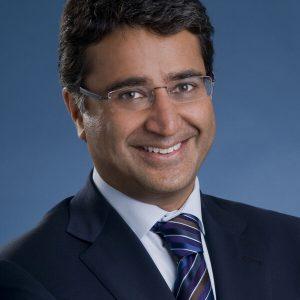
Shaf Keshavjee, OC O.Ont MD MSc FRCSC FACS
-
Chief of Innovation, UHN
-
Director, Toronto Lung Transplant Program
-
Director, Latner Thoracic Research Laboratories
-
Professor of Thoracic Surgery & Biomedical Engineering Sprott Department of Surgery
-
Vice Chair Innovation, Dept. Surgery, University of Toronto
Shaf Keshavjee is a Thoracic surgeon and Director of the Toronto Lung Transplant Program. He is Chief of Innovation at University Health Network (UHN). He is Professor of Thoracic Surgery and Biomedical Engineering and Vice Chair for Innovation, Department of Surgery, Temerty Faculty of Medicine at the University of Toronto (UofT).
Dr Keshavjee completed his medical training at the University of Toronto in 1985. He subsequently trained in General Surgery, Cardiac Surgery and Thoracic Surgery at UofT followed by fellowship training at Harvard University and the University of London for airway surgery and heart-lung transplantation, respectively. He joined the faculty at UofT in 1994 and was promoted to Full Professor in 2002. Dr. Keshavjee was the inaugural holder of the Pearson-Ginsberg Chair in Thoracic Surgery and served as the Chair of the Division of Thoracic Surgery at the University of Toronto from 2004 to 2010.
Dr Keshavjee’s clinical practice is in thoracic oncology, lung cancer and lung transplantation. He has a passion for surgery and innovative research. He is a Senior Scientist in the Toronto General Hospital Research Institute, UHN. He leads a large team of researchers in a foremost pulmonary research program and is widely published in the field. His specific research interest is in lung injury related to transplantation. His current research involves the study of support systems, molecular diagnostics and gene therapy to repair organs and to engineer superior organs for transplantation.
Dr. Keshavjee has served on the board of directors of the International Society for Heart and Lung Transplantation, the Canadian Society of Transplantation, and the American Association for Thoracic Surgery, where he also served as Treasurer and 102nd President. He has received numerous awards for contributions to medicine, including the George Armstrong Peters Young Investigator Award, Canada’s Top 40 Under 40 Award, the Colin Woolf Award for Excellence in Medical Education, and the Lister Prize in Surgery – the highest award for research achievement in the Department of Surgery at UofT. He is a Fellow of the Canadian Academy of Health Sciences and has been awarded Honorary Doctor of Science Degrees from both Ryerson University and Queen’s University. He was also awarded an Honorary Fellowship to the Royal College of Surgeons of Edinburgh for his service to mankind.
He received the Lifetime Achievement Award from the Canadian Society for Transplantation, the Lifetime Achievement Award from Canadian Blood Services, and the American Society of Transplantation Innovation Award for contributions to the field of lung transplantation. He received the prestigious Flance-Karl Award (2021) from the American Surgical Association – awarded to a surgeon who has made a seminal contribution in basic laboratory research which has been applied to clinical surgery for his work in ex vivo organ perfusion. He also received the FNG Starr Award (2021) – the highest national award from the Canadian Medical Association recognizing a physician for their outstanding and inspiring lifetime achievement.
Dr Keshavjee has received two Queen Elizabeth II Diamond Jubilee Medals and the national Governor General’s Award for Innovation. He was awarded the Order of Ontario in 2014 and received Canada’s highest civilian honour in 2013 with an appointment as an Officer of the Order of Canada.
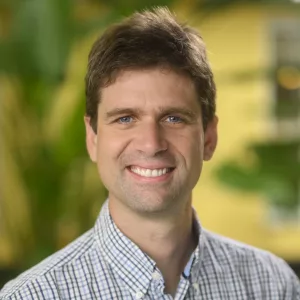
Benjamin Haibe-Kains, PhD
-
Executive AI Scientific Director, UHN
-
Scientific Director, AI Hub, University Health Network
-
Scientific Director, Cancer Digital Intelligence, Princess Margaret Cancer Centre
-
Head Of Data Science, Structural Genomics Consortium, University Health Network
-
Infrastructure Lead, Temerty Centre for AI Research and Education in Medicine, University of Toronto
-
Reproducibility Thematic Program Lead, Data Sciences Institute, University of Toronto
Dr. Benjamin Haibe-Kains is the Executive AI Scientific Director at the University Health Network, a Senior Scientist at the Princess Margaret Cancer Centre, University Health Network, and a Professor in the Department of Medical Biophysics at the University of Toronto (Canada). He earned his PhD in Bioinformatics from the Université Libre de Bruxelles (Belgium) and pursued postdoctoral training at the Dana-Farber Cancer Institute and the Harvard School of Public Health (USA) as a Fulbright Scholar.
Dr. Haibe-Kains holds the Canada Research Chair in Computational Pharmacogenomics and serves as Scientific Director of the Cancer Digital Intelligence Program at Princess Margaret and the AI Hub at the University Health Network. He is also Head of Data Science at the Structural Genomics Consortium. His research harnesses artificial intelligence (AI) and machine learning (ML) to integrate large-scale chemical, radiological, and (pharmaco)genomic datasets. By developing predictive models for drug development, cancer progression and treatment response, his team aims to accelerate innovation in precision medicine and ultimately improve outcomes for patients.
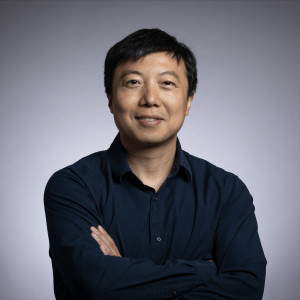
Bo Wang, PhD
-
Chief AI Scientist at UHN and Canada Research Chair in Artificial Intelligence for Medicine
-
Vector Institute Faculty Lead
-
Artificial Intelligence Scientist, PMCC, UHN
-
Faculty of Medicine, University of Toronto
-
Canada CIFAR Artificial Intelligence Chair
Dr. Bo Wang is a tenure-track Assistant Professor in the Departments of Computer Science and Laboratory Medicine & Pathobiology at the University of Toronto. He is the inaugural Temerty Professor in AI Research and Education in Medicine. Dr. Wang is the Chief AI scientist at the University Health Network, the largest research hospital in Canada. He also holds a CIFAR AI Chair at Vector Institute. Dr. Wang obtained his PhD from the Department of Computer Science at Stanford University in 2017. Dr. Wang’s research focuses on machine learning, computational biology, and computer vision, with a particular emphasis on their applications in biomedicine. His significant contributions to these fields have led to his recognition through numerous esteemed awards, including the Gairdner Early Career Researcher Award and the Canada Research Chair Award.